
Private VS Group Dog Training - Which Is Best?

Introduction
When it comes to dog training, pet owners often face the choice between private 1-2-1 sessions and group classes. Both methods have their advantages and disadvantages, and deciding which one to start with can depend on various factors, including your dog’s personality, training needs, and your own preferences as an owner.
As a provider of 1-2-1 dog training I personally feel all dogs (especially puppies) should undergo some level of private 1-2-1 training first.
So let’s explore the pros and cons of both and why it maybe best to start with Private before going onto group.

Pros:
- Personalised Attention: Private sessions offer you the opportunity to have a knowledgeable trainer all to yourself, the attention and focus is solely on you! Meaning you can make the most of every session!
- Flexible Scheduling: You can schedule sessions at times that are convenient for you, making it easier to fit into your busy life.
- Focused Environment: Without the distractions of other dogs and owners, your dog can concentrate better, leading to more progression.
- Individual Pace: The trainer can move at a pace that suits you and your dog, ensuring you both only move onto the next thing when you’re ready.
- Endless Advise: In private sessions you don’t just have to do the set training, it gives you the chance to ask for as much advise as you within the time you have.
- Real-World Practice: Prepare your dog for real-world situations where distractions are present.
Cons:
- Cost: Private training sessions are typically more expensive than group classes.
- Socialisation Opportunities: In private 1-2-1 training, your dog may have fewer chances to socialise with other people and dogs, since sessions usually take place in your home, garden, or local area. While social interactions aren’t always guaranteed in these environments, they can still occur naturally if others are nearby.
That said, socialisation is about much more than simply meeting other dogs and people—it’s about exposing your dog to a variety of experiences in a safe and controlled way. In fact, private training allows your dog to interact in real-world environments, making it a unique advantage despite the potential for fewer direct social encounters. So this one is a bit of a split!
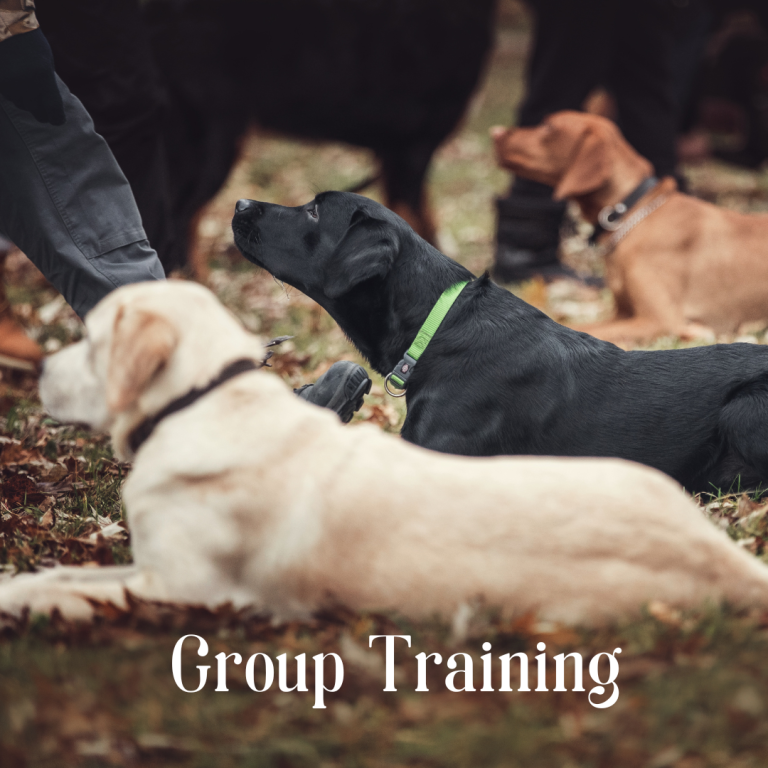
Pros:
- Cost-Effective: Group classes are generally less expensive than private sessions, making them more accessible for many pet owners.
- Socialisation: Group settings provide valuable opportunities for your dog to interact with other dogs and people, however, this can also have a downside of being too overwhelming for some.
- Community Support: Group classes offer a sense of community and support from other dog owners who are experiencing similar challenges.
Cons:
- Less Individual Attention: Trainers must divide their attention among all participants, which can result in you receiving less guidance and possibly like you are struggling.
- Fixed Schedule: Group classes typically run on a set schedule, which may not always align with your availability.
- Varying Learning Speeds: Dogs in the class may have different learning speeds, which can make it challenging for the trainer to address each dog’s needs effectively.
- Potential Distractions: The presence of other dogs and owners can be distracting, making it harder for some dogs to focus on the training.
Why Starting with Private 1-2-1 Sessions is Beneficial
- Establishing a Strong Foundation: Beginning with private sessions allows you to lay a solid foundation for your dog’s training. The one-on-one attention ensures that your dog understands the basic cues and behaviours without the added pressure of a group setting.
- Building Confidence: Dogs that are shy, anxious, or have had little prior training may find group classes overwhelming. Private training helps build their confidence in a controlled, stress-free environment before introducing them to the more chaotic atmosphere of group classes.
- Customised Training Plans: Private trainers can tailor the sessions to address specific behavioural issues that might not be adequately covered in a group setting. This personalised approach ensures that your dog’s unique needs are met.
- Better Control Over Distractions: Training without the distractions of other dogs and owners can lead to quicker and more effective learning. Once your dog has mastered the basics, they will be better equipped to handle the distractions present in group classes.
- Transitioning to Group Classes: Once your dog has a solid foundation from private training, they will be more prepared to benefit from the socialisation offered by group classes. This transition can be smoother and more successful, leading to better overall training outcomes.
Conclusion
As a dog trainer, I can see the strengths in both types of training classes and even have dog trainer friends who run great group classes. However, I have also heard the stories from the other side, such as breed blaming and being left to struggle due to class sizes too large.
The best approach depends on your dog’s individual needs and your training goals. However, starting with private sessions can provide a strong foundation, build confidence, and address specific issues, making the transition to group classes more effective and enjoyable for both you and your dog. By combining the strengths of both methods, you can ensure a well-rounded training experience that sets your dog up for success.